SpaceX IPO Day: Extreme Greed, Identified Sellers, and the Yuan Approaching Its Signal
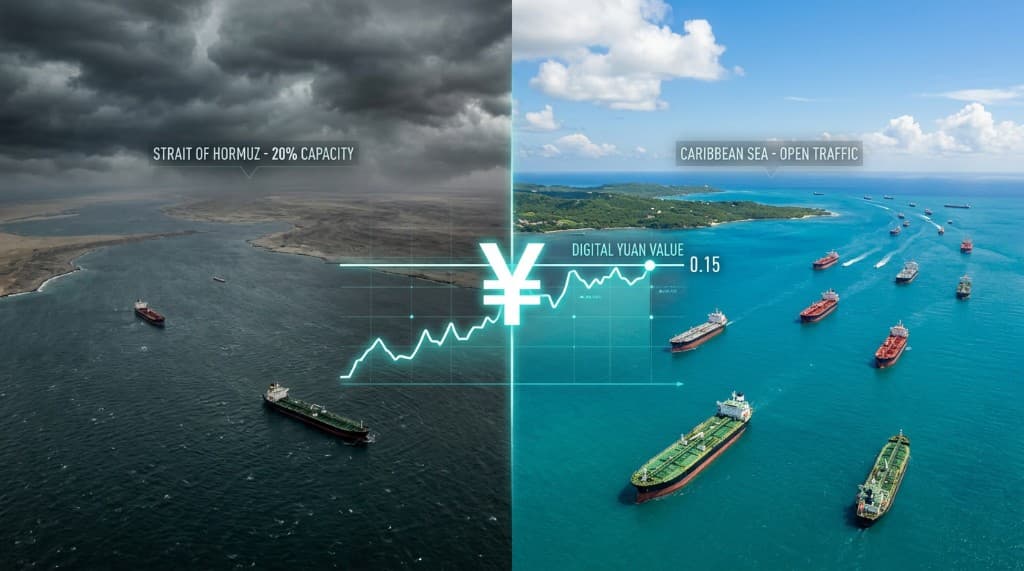
SpaceX begins trading today. Retail investors bought Virgin Galactic by mistake, confusing its ticker with SpaceX's — the clearest possible signal of peak euphoria. Meanwhile, the pressure on Bitcoin and gold has been traced to identified forced sellers: Gulf states unable to export oil through a 20%-capacity Hormuz Strait, and Russia funding its war machine after Ukrainian attacks on its refineries. Both are temporary. The Yuan is now within 1.5% of its key resistance at 0.15. José Luis Cava also identifies uranium as the next medium-term opportunity.
The ticker confusion that says everything
On SpaceX's first day of trading, retail investors sent Virgin Galactic's stock surging — not because of any news about Virgin Galactic, but because its ticker symbol (SPCE) bears a visual resemblance to the ticker SpaceX will trade under (SPCX). Investors who wanted SpaceX simply bought the wrong company in their excitement.
This is not an amusing anecdote. It is a precise behavioral indicator. When retail participants are moving fast enough to confuse tickers, buying without reading the name of the company, it describes a moment of maximum euphoria — the kind that Cava identifies as the "sin of greed" and that historically precedes corrections.
The recommended response to this environment is not to participate in the euphoria, but to sell into it if you already hold positions with gains of 20-30% or more. The medium and long-term case for SpaceX as a business remains intact — Elon Musk's operational and financial capabilities are not in question. What is in question is whether today's price, set at the moment of maximum retail excitement, represents a rational valuation. The historical data on IPO first-day pricing suggests it does not.
The sellers behind the Bitcoin and gold decline
The pressure on Bitcoin and gold over the past weeks has had visible causes that markets have been slow to articulate. Cava's analysis identifies three categories of sellers:
Gulf state sovereigns: The Hormuz Strait, through which the Gulf's oil exports normally flow, is currently operating at approximately 20% of its normal capacity due to Iranian interference. The Gulf states — Saudi Arabia, the UAE, and others — cannot export their full oil volumes and are therefore generating significantly less cash from oil revenues than normal. To fund government expenditures, they are liquidating gold reserves. This selling is not strategic — it is an emergency cash generation exercise driven by a temporary geopolitical disruption.
Russia: Ukrainian attacks on Russian oil refineries have reduced Russia's petroleum processing capacity and therefore its export revenues. To fund the ongoing war machine, Russia is selling gold reserves. Again, this is forced liquidation, not a strategic decision about the value of gold.
A third actor identified specifically by the HOPLA team through analysis not publicly disclosed.
The significance of identifying these sellers is operational: forced sellers eventually stop. When Hormuz normalizes, when the Iranian situation resolves, when Russia's funding pressures ease — the selling pressure disappears. The gold and Bitcoin that has been sold by these actors into a weak market will not be replaced at the same prices. The temporary nature of the pressure creates the buying opportunity.
The energy geography is permanently changing
Iran's attempt to use the Hormuz Strait as leverage has produced an unintended structural consequence. By restricting the strait, Iran has damaged itself more than its adversaries. The Gulf states are now actively building pipeline alternatives — routes that bypass Hormuz entirely. Once constructed, these alternatives permanently reduce Iran's ability to use the strait as a weapon. Iran's strategic position is weakening structurally, not just temporarily.
Simultaneously, the center of gravity of global energy production is shifting from the Gulf to the Caribbean basin. The United States, Venezuela, Guyana, and Brazil have all expanded production, and geopolitical alignment in the region points toward continued American influence over this supply. This is a multi-year structural shift, not a quarterly fluctuation.
The United States Navy has been actively supporting shipping through the Gulf: neutralizing Iranian Revolutionary Guard radar systems and providing safe routing coordinates to vessels navigating around mines and fast boat threats. China, notably, has cooperated — selling portions of its reserves and reducing aggressive buying — to help stabilize global energy prices and prevent the kind of extreme price spike ($150-200 per barrel) that would have damaged global growth.
The currency framework: two signals to watch
The second video provides a precise technical and macroeconomic framework for understanding what will trigger the end of the current corrective phase.
Signal one: Yuan/dollar at 0.15. The Yuan has been in an accelerated uptrend against the dollar since April 2025 — a trend driven by China's central bank shifting from liquidity injection to a neutral or slightly restrictive stance. Today (June 12) the CNY/USD rate stands at approximately 0.1479, within 1.5% of the key resistance level at 0.15. When the Yuan reaches 0.15 and reverses back below 0.1465, that reversal will indicate that China has stopped withdrawing liquidity and may be beginning to reinject. That is the buy signal for risk assets globally.
Signal two: EUR/USD at 1.1640. The euro recently attempted a breakout above the 1.15-1.16 resistance zone — a false breakout that failed. The key level now is 1.1640. If the euro breaks below this level, it will likely fall toward 1.1575, confirming dollar strength. A stronger dollar, combined with continued Chinese liquidity restraint, creates the conditions for additional downward pressure on equities. This level adds a second real-time indicator to the monitoring framework alongside the Yuan.
Gold strategy: the right vehicle for the right phase
The analysis distinguishes clearly between different gold investment vehicles and when each is appropriate:
Gold ETFs and physical gold: The correct vehicle during lateral market phases or gold price corrections. These instruments track gold price with lower volatility than equity-linked alternatives. For investors who want strategic gold exposure without tactical timing requirements, ETFs remain the base allocation.
GDX (large-cap gold miners): These amplify gold price moves in both directions. During gold uptrends, they outperform gold significantly. During lateral or downward phases, they significantly underperform. They are tactical instruments, not strategic holdings.
GDXJ (small-cap gold miners): The best-performing vehicle during confirmed gold uptrends — equivalent to the Russell 2000 within the gold mining sector. Higher volatility, higher upside during bull phases. Only appropriate when a new uptrend impulse has been confirmed, not during correction phases.
The current environment — with Gulf state forced selling creating temporary downward pressure — points toward patience with gold ETFs and restraint on miners until the pressure resolves and a new uptrend is confirmed.
Uranium: the next medium-term opportunity
As the geopolitical situation in the Middle East gradually resolves — with Iran's position weakening, global risk premiums declining, and energy demand in Asia continuing to grow — the conditions for a sustained increase in uranium demand are strengthening. Nuclear energy is the only large-scale baseload power source that can expand rapidly enough to meet Asia's growing electricity needs without carbon emissions.
The URA ETF (Global X Uranium ETF), which tracks uranium mining companies, is currently in a short-term corrective phase within a medium-to-long-term uptrend. Its technical behavior relative to the S&P 500 shows a defined neckline structure that suggests a significant bullish move ahead once the correction completes.
The practical note for European investors: accessing GDXJ and URA in their US-listed forms requires currency conversion to dollars on a regulated platform. UCITS-compliant equivalents are available on European exchanges for investors who need euro-denominated access.
The operative summary for June 12
SpaceX is listing today in an environment of extreme retail greed — the wrong moment to buy. The correction that follows this listing, driven by forced institutional rebalancing and the lock-up mechanisms that will activate in August, remains the primary opportunity window.
Bitcoin and gold are being sold by temporary forced sellers, not permanent strategic sellers. The buying opportunity arrives when those sellers exhaust their positions.
The Yuan is within 1.5% of its reversal signal. The Euro/dollar level at 1.1640 provides a second indicator. Both will resolve in the coming weeks.
Analysis based on José Luis Cava videos published June 12, 2026. For informational purposes only — not financial advice.
Explore the data
Check the latest congressional trades and active investment signals.