The US Is Building a Financial Weapon Against China — and the Fed Is Secretly Printing Again
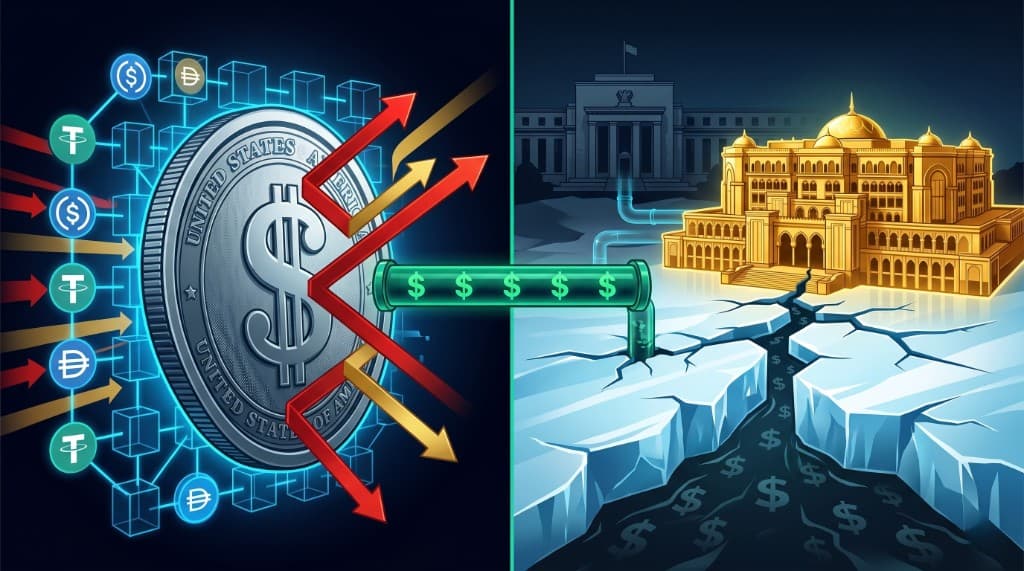
Cava exposes two hidden threats the market is ignoring. First: the US is engineering a tax on foreign capital inflows — powered by stablecoin reform — designed to punish China while reinforcing dollar dominance. Second: the UAE just requested a Fed swap line despite massive reserves, revealing a hidden liquidity crisis that forced the Fed to quietly inject dollars into the system. The Fed says it's tightening. The data says it's printing. Both stories point to the same conclusion: the dollar system is being weaponized, and the next market shock won't come from earnings — it'll come from plumbing.
The hidden financial war
While markets celebrate new highs and everyone debates whether the Buffett Indicator matters, Cava warns that two structural shifts are happening beneath the surface that could reshape global markets for years.
Neither is priced in.
Threat #1: Taxing the world's dollar addiction
Here's the setup:
- China's excess savings are massively invested in US financial assets — stocks, bonds, real estate — despite official denials
- The US knows this and is building a mechanism to tax these capital inflows
- The vehicle? Stablecoin reform
How stablecoins become a weapon
The US is separating the dollar's two functions:
- Payment function → Stablecoins (digital dollars for transactions, trade settlement, global commerce)
- Investment function → Traditional dollar assets (stocks, bonds, treasuries)
By making stablecoins the global payment rail, the US ensures dollar dominance in commerce without requiring foreigners to hold US financial assets. Then it can tax the investment function — foreign holdings of stocks, bonds, and dollar-denominated assets — without disrupting payments.
This is surgical. China loses both ways:
- If they keep investing in US assets → taxed
- If they pull out → no alternative market has the depth, liquidity, or capital freedom of the US
- The yuan can't replace the dollar because China maintains capital controls that prevent free movement
The US isn't just winning the trade war. It's building a financial architecture where China pays rent to participate in the global economy.
Threat #2: The UAE's hidden crisis
This is the story that should scare you more.
The UAE has requested a swap line from the Federal Reserve. In plain terms: they need dollars from the Fed in exchange for dirhams, temporarily, to solve a liquidity problem.
Why is this alarming?
A country that shouldn't need dollars... needs dollars
The UAE has:
- Massive oil revenues
- One of the world's largest sovereign wealth funds (ADIA: ~$900B+)
- A strong external position
- Decades of dollar accumulation
If THIS country needs emergency dollar liquidity from the Fed, it means something is deeply wrong that we can't see. Possible explanations:
- Offshore investments have gone bad — leveraged positions, illiquid assets, or counterparty failures
- War-related financial obligations — the UAE may be bearing hidden costs from the Iran conflict
- Contagion risk — if UAE's financial system is stressed, other Gulf states may follow
The Fed's contradiction
Here's where it gets really interesting for markets:
The Fed has been running quantitative tightening — supposedly shrinking its balance sheet, removing dollars from the system. But by opening a swap line to the UAE, it's doing the opposite: injecting fresh dollars.
The Fed says: "We're tightening." The Fed does: prints dollars to bail out a Gulf state.
This is stealth QE — and it's bullish for financial assets in the short term, because more dollars in the system means more fuel for stocks, bonds, and crypto.
What this means for markets
Short-term (weeks)
- Bullish: The Fed is injecting liquidity whether it admits it or not. More dollars = higher asset prices.
- Markets will remain supported as long as the swap line operates quietly.
Medium-term (months)
- Volatile: If the capital flow tax materializes, foreign selling of US assets could trigger corrections.
- China may preemptively reduce US holdings, creating selling pressure.
- The stablecoin reform timeline matters enormously — watch regulatory announcements.
Long-term (years)
- Dollar dominance reinforced: The dual-function separation (stablecoins for payments, traditional assets for investment) makes the dollar even harder to replace.
- China increasingly cornered: No escape route from dollar dependency.
- Crypto structurally important: Stablecoins become official plumbing of the global financial system.
The market is focused on earnings and tariffs. The real story is plumbing. And the plumbing is leaking.
This analysis is based on Cava's financial commentary from April 23, 2026. For informational purposes only — not financial advice.
Explore the data
Check the latest congressional trades and active investment signals.