Energy Is the Weapon: How the US Controls Global Markets Through Chokepoints
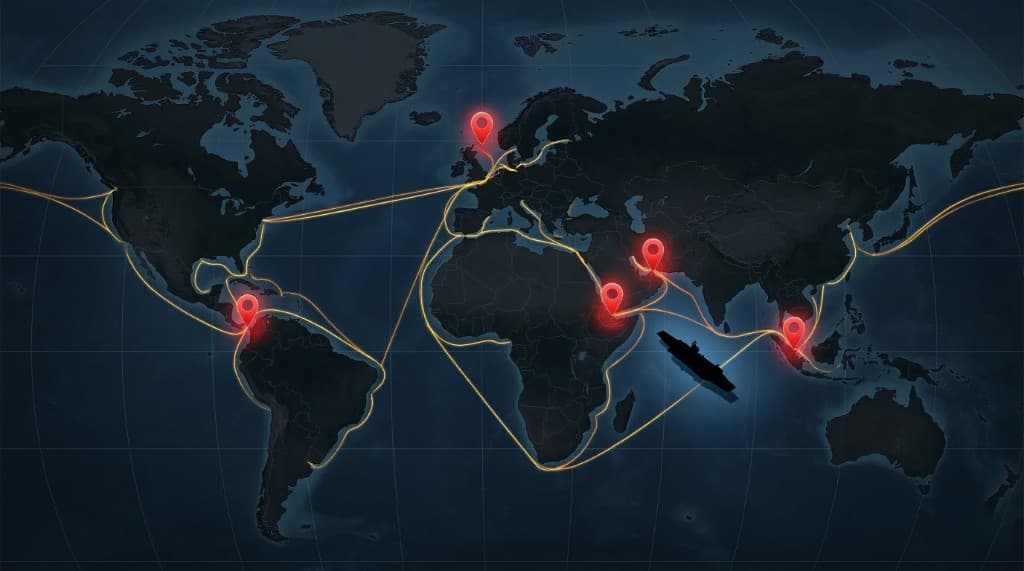
The US strategy for global dominance runs through energy control — cheap AI-powering energy at home, expensive energy for competitors. From the Strait of Hormuz to Greenland's Arctic routes, the chokepoint map explains more about oil prices than any supply model.
The real game: AI needs cheap energy, competitors need expensive energy
The conventional view of geopolitics focuses on military power, trade agreements, and diplomatic alliances. But the deeper game — the one driving strategic decisions in Washington — is about energy control.
The logic is straightforward:
- Artificial intelligence is the defining technology of this decade. Running AI at scale requires enormous amounts of cheap energy — data centers, training clusters, and inference infrastructure are fundamentally energy businesses
- The nation that can power AI cheaply while making competitors' energy more expensive gains an insurmountable structural advantage
- This isn't just about oil prices — it's about who controls the cost of computing for the next generation of economic output
The US strategy to achieve this runs through a single mechanism: control of maritime chokepoints.
The country that controls where energy flows controls the price of everything — from a barrel of oil to a GPU cycle in a data center.
The chokepoint map: five gates to global energy
The US has positioned itself to influence or control the world's most critical energy transit routes:
- Strait of Hormuz — 20% of global oil passes through this narrow waterway between Iran and the Arabian Peninsula. Current military operations are directly aimed at establishing US naval dominance here
- Panama Canal — connects Atlantic and Pacific trade routes. The US has historical and strategic leverage over its operations
- Red Sea / Suez Canal — the primary route for Middle Eastern oil to reach Europe. Already disrupted by regional conflicts
- Strait of Malacca — the lifeline for Chinese energy imports from the Middle East. A chokepoint that gives the US enormous leverage over Beijing
- Arctic routes near Greenland — emerging shipping lanes as ice recedes. US interest in Greenland is not about real estate — it's about controlling the next generation of energy transit
Each of these chokepoints is a valve that the US can tighten or loosen depending on strategic objectives. Control the valves, control the global energy price — and by extension, control who can afford to run AI infrastructure competitively.
Strait of Hormuz: insurance as a weapon
The US approach to the Strait of Hormuz goes beyond military presence. The emerging strategy involves providing cheap insurance and naval escort services to oil tankers transiting the strait.
This is a brilliant strategic move:
- Tankers that accept US escort get favorable insurance rates, effectively reducing their transport costs
- Tankers that don't face premium insurance rates and the risk of operating in a conflict zone without protection
- The result is a de facto toll system where the US controls who ships through the strait and at what cost
The primary targets of this strategy are Asian importers, particularly China and Japan, who depend heavily on Gulf oil transiting through Hormuz. By controlling the insurance and security environment, the US can make energy more expensive for its primary economic competitors without firing a single additional shot.
Iran's critical vulnerability: Kharg Island
Iran's oil export infrastructure has a single point of failure: Kharg Island. This small island in the Persian Gulf handles the vast majority of Iran's crude oil exports. US military strategy appears focused on either controlling or blockading this island to weaken Iran financially.
The strategic calculation:
- Without Kharg Island exports, Iran loses its primary revenue source, crippling its ability to fund military operations and domestic governance
- Iran's oil infrastructure is widely considered to be poorly managed and outdated, making it vulnerable to disruption
- A blockade doesn't require destroying the island — simply preventing tankers from loading would achieve the same economic effect
This explains why Iran has been using asymmetric tactics (drones, proxy threats) rather than conventional military responses. Iran knows that a direct confrontation risks losing Kharg Island, which would be economically catastrophic.
Oil prices: financial operations, not physical shortages
The recent sharp increases in oil prices are not primarily driven by actual supply shortages. The physical oil market — barrels produced versus barrels consumed — hasn't changed dramatically enough to justify the price moves.
Instead, the drivers are financial and strategic:
- China and Japan are stockpiling — both nations are building strategic reserves in anticipation of potential supply disruptions through Hormuz. This creates additional demand that pushes prices higher without reflecting actual consumption
- Financial market positioning — futures traders and hedge funds are amplifying the price moves through leveraged bets on geopolitical risk
- Insurance cost increases — higher tanker insurance premiums get priced into the delivered cost of oil, even when the crude itself hasn't changed in price
Oil isn't expensive because there isn't enough of it. It's expensive because everyone is scrambling to secure it before someone else controls the valve.
The G7's decision to release strategic oil reserves is a symbolic gesture aimed at tempering market expectations rather than addressing physical supply. It signals that Western governments are monitoring prices and willing to intervene, which helps cap speculative excess — but it doesn't change the underlying strategic dynamics.
The oil price outlook: bullish but losing momentum
The overall trend in oil remains bullish, but there are signs that momentum is fading:
- The initial shock of the Iran conflict has been absorbed by markets
- G7 reserve releases create periodic downward pressure
- OPEC production increases provide a supply cushion
- Financial positioning is becoming crowded on the long side
This doesn't mean oil is about to crash — the geopolitical risk premium is real and justified. But the explosive upside moves may be behind us. The more likely scenario is elevated prices ($75-$90 range) with high volatility, rather than a sustained march above $100.
For investors, this means energy stocks remain supported but the easy gains from the initial spike have been captured. Selectivity matters more from here.
China's energy dilemma
China faces a structural vulnerability that this crisis has exposed:
- 80% of China's oil imports transit through the Strait of Malacca — a chokepoint the US Navy can influence
- China has diversified toward Russian pipeline gas, but this creates dependency on a single alternative supplier
- Strategic stockpiling provides a buffer but not a solution — reserves buy time, not security
This energy vulnerability is a key reason why China's diplomatic stance on the Iran conflict has been measured. Beijing can't afford to antagonize the US while its energy supply runs through US-influenced waterways.
China builds factories. The US controls the sea lanes that fuel them. That asymmetry hasn't changed — and this crisis proves it.
What to watch
- US naval operations in the Strait of Hormuz: any formalization of escort/insurance programs would confirm the chokepoint control strategy
- Kharg Island developments: military action or blockade around the island would be the most significant escalation for oil markets
- Chinese and Japanese reserve data: continued stockpiling signals ongoing concern about supply disruption
- Oil futures curve structure: a shift from backwardation to contango would signal the market expects prices to moderate
- G7 reserve release schedule: frequency and volume will indicate how seriously Western governments view the price pressure
This analysis is based on macroeconomic commentary by José Luis Cava (HOPLA Finance). CongressFlows synthesizes publicly available market analysis to help investors contextualize congressional trading data. This is not financial advice.
Explore the data
Check the latest congressional trades and active investment signals.