Blog
Market analysis and congressional trading insights
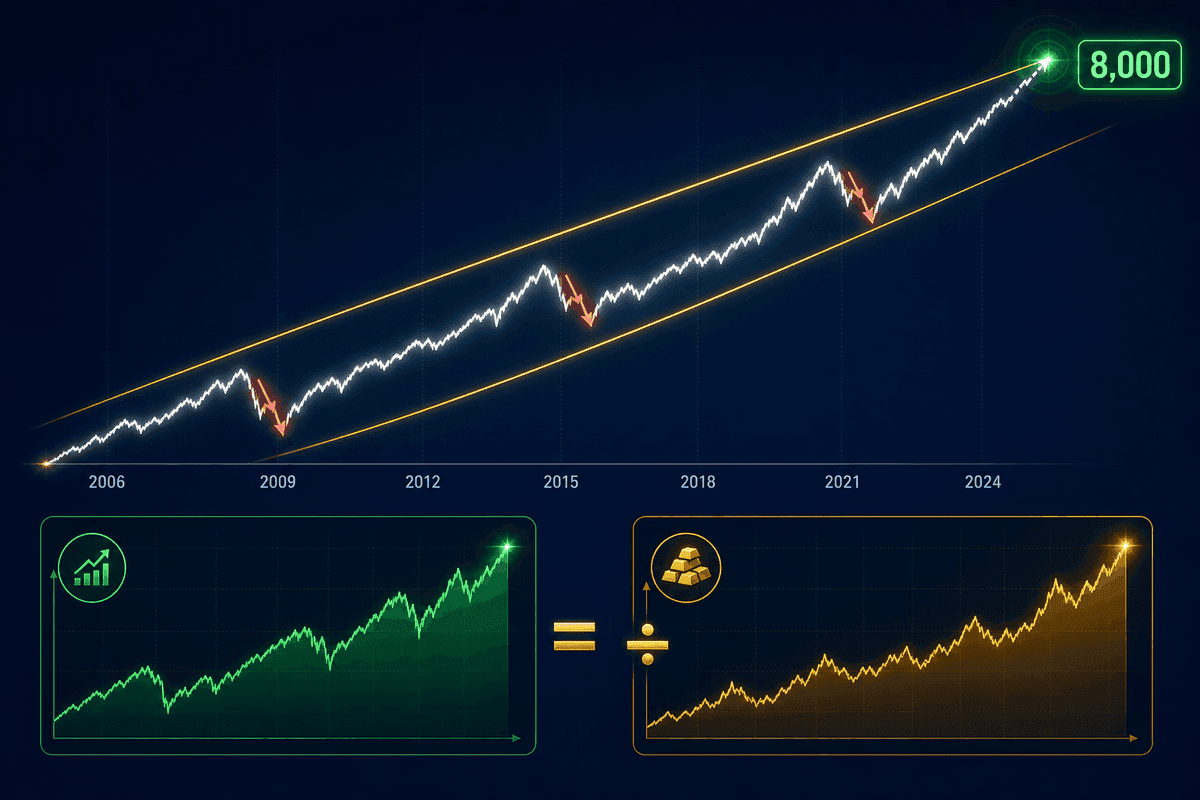
Why the SP500 Bull Case Is Still Intact: Liquidity, AI, and the Gold Signal Nobody Watches
José Luis Cava lays out his most complete technical and macro case for why the SP500 bull market that started in 2008 is still running. Two drivers dominate: the global liquidity cycle and the AI productivity revolution. The price target is 8,000 to 8,200 points. But the most important idea in the video is not the target — it is the specific signal that would tell you when to actually exit. It is not a market crash. It is what gold does at the same time.
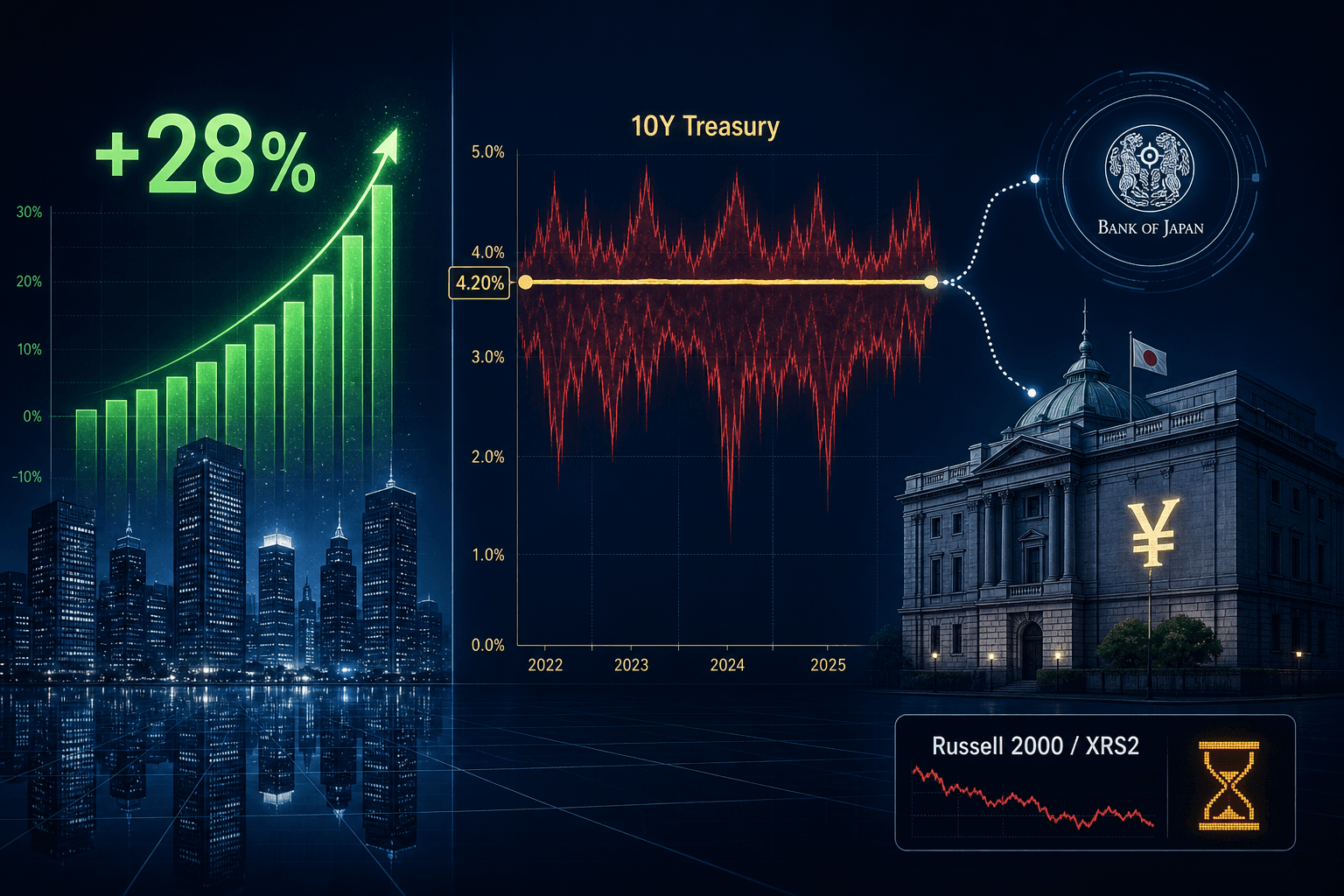
SP500 Earnings Up 28%, No Dot-Com Bubble, and Why the Bank of Japan Just Sent a Bullish Signal
SP500 companies just reported 28% earnings growth and 11% sales growth. Central banks are threatening rate hikes but HOPLA believes they will not follow through. The Bank of Japan sold 35 billion dollars in US Treasuries — and paradoxically, that is a bullish signal. And the dot-com bubble comparison that keeps appearing in financial media? The numbers show why it does not hold. Plus: why the Russell 2000 may be the next opportunity, and the specific ETF to watch.

Trump Meets Xi, the AI War Heats Up, and the Space Sector Is Being Ignored
The Trump-Xi meeting is not about trade tariffs. It is about energy and artificial intelligence — the two resources that will define the next decade of global power. José Luis Cava argues Trump arrives from a position of strength, a deal is imminent, and the consequences for markets in 2026 and 2027 could be extraordinary. He also identifies the space sector as the most undervalued growth opportunity right now, and delivers a hard message to younger generations about why learning to speculate is no longer optional.

Inflation Is a Tax on the Poor. Assets Are a Machine for the Rich.
Central banks inject liquidity. Prices rise. The poor pay more for basics. The middle class gets pushed into higher tax brackets despite losing real purchasing power. The wealthy hold assets that appreciate, borrow against them tax-free, and never sell. José Luis Cava explains why this is not a flaw in the system — it is the system. And why the Wizard of Oz, written in 1900, already had the answer.

What It Takes to Become a Profitable Speculator: Self-Belief, Loss Control and 3 Years
José Luis Cava breaks down what separates profitable speculators from those who quit. The answer is not intelligence, not passion, and not a perfect system — it is self-belief, strict loss control, and the willingness to do 300 to 500 operations a year until the craft becomes instinct. Even a 30% win rate can be profitable. Most people give up right before the three-year mark where everything clicks.
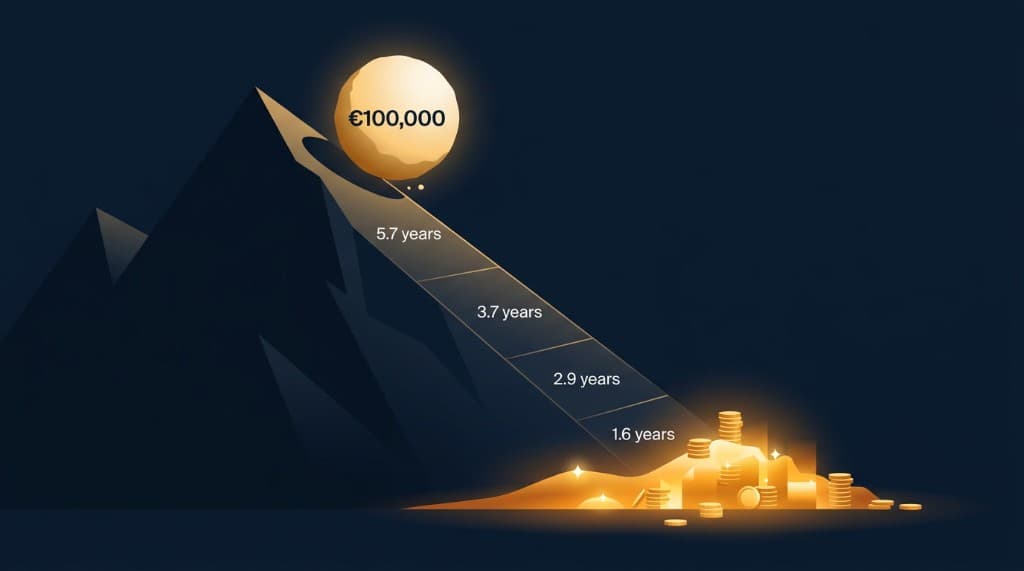
The First €100K Is a Nightmare — And That's Exactly the Point
Charlie Munger called it a nightmare. Fernando Sánchez calls it the great financial inflection point. The first €100,000 in liquid financial assets is the hardest milestone you'll ever reach — and the one that changes everything. At 10% annual returns, €100K generates €833 per month without lifting a finger. But getting there destroys most people in the first five years, when compound interest is still a slow-moving snowball. Here's the math that makes the difference: formula of poverty vs formula of wealth, three scenarios to reach 100K, and why the second hundred thousand arrives three times faster than the first.

US Economy Stronger Than Expected, Earnings Up 25% — But Two Threats Are Building
The data is unambiguous: US GDP growing at 2.36% (NY Fed), SP500 earnings up 25% with more than a quarter of companies reporting, and consumer spending strong across ALL income levels — not just the wealthy K-shaped recovery. Retail sales at all-time highs despite record-low consumer confidence. But two threats are forming: liquidity has been withdrawn after the $130B injection, and retail investors have flipped from panic-selling to aggressive buying. Both are short-term caution signals.

SP500 Target 15,000 by 2027 — Bessent Controls the Liquidity, AI is the New Internet, and the Market Is Missing the Point
Cava argues the market is making a massive mistake focusing on who leads the Fed. The real power lies with Treasury Secretary Scott Bessent, who controls liquidity through the Treasury's Fed account — and as a political appointee, has every incentive to keep markets rising. The analog: the 1990s, when internet-driven productivity gains allowed Greenspan to keep rates low while the SP500 multiplied by five. Today, AI is building that same productivity base — just not yet visible in the data. Taking 3,000 as the AI investment starting point and applying the same 5x multiple: target 15,000 on the SP500 by 2027.
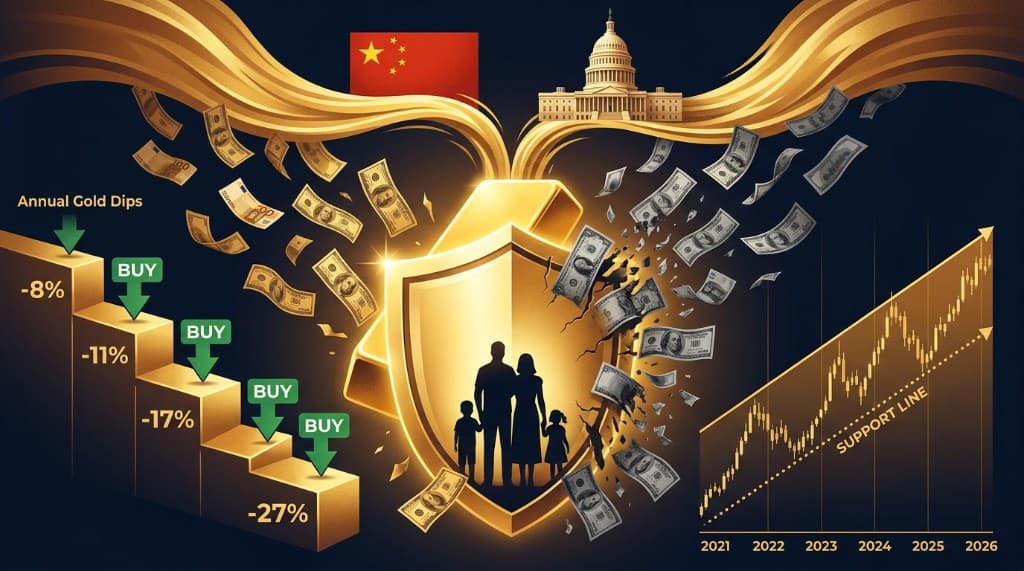
Why I'm Bullish on Gold — Cava Launches a New Series on Defending Against Monetary Degradation
Cava launches a new video series titled 'Why Am I Bullish?' and starts with gold. This isn't about trading — it's about strategic positioning against monetary degradation. He explains the two macro forces driving gold (China's surplus and US fiscal deficits), reveals his team's simple two-instrument approach (gold ETC + cash fund), and shares the historical data proving gold drops 5-27% every single year — creating predictable buying opportunities. The message: you're not speculating to get rich, you're speculating to survive.
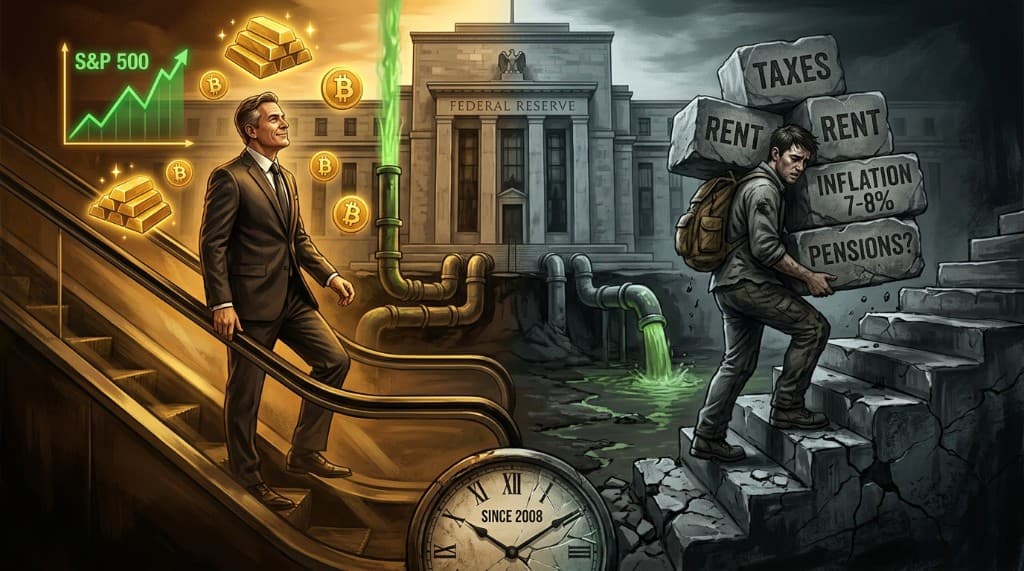
The Great Divide — Asset Owners Win, Workers Lose, and Central Banks Can't Stop Printing
Cava delivers his most philosophical analysis yet. Society has split into two classes: those who own the money-making machine (SP500, gold, Bitcoin) and those who depend solely on their labor. Workers bear the taxes, fund pensions they may never collect, and lose 7-8% of purchasing power annually to real inflation. Since 2008, central banks have flooded the system with liquidity — and they can't stop. US debt interest payments now exceed defense spending. Raising rates would collapse the system. The only mathematical outcome: more printing, more degradation, more upside for hard assets.
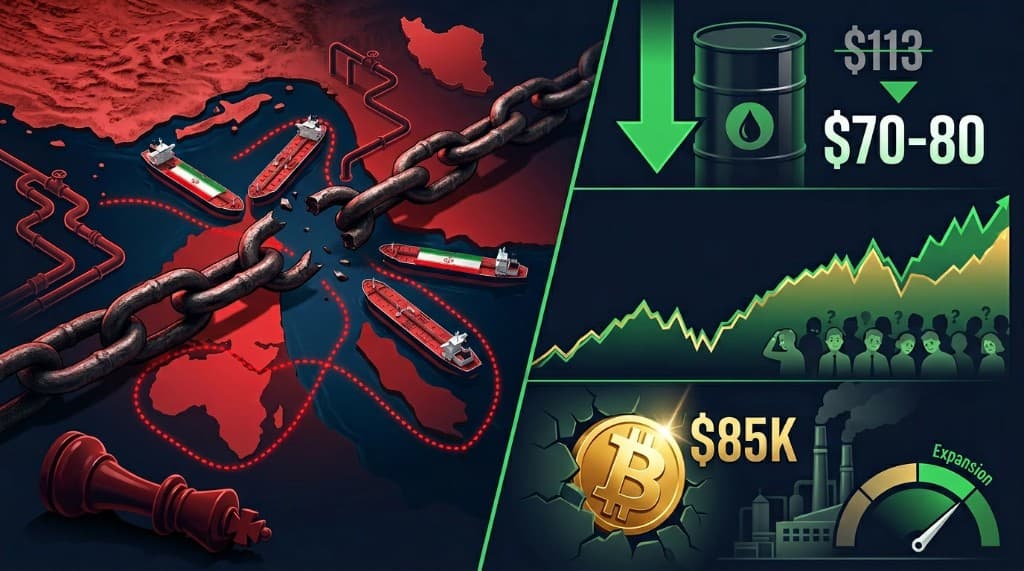
Hormuz Was Iran's Historic Mistake — Oil Heading to $70-80, Bitcoin Targets $100K, and the SP500 Rally Isn't Over
Cava delivers a strategic reversal on Iran: the Hormuz closure wasn't a power move — it was a historic blunder that boosted US oil revenues, strengthened the dollar, and permanently reduced Iran's strategic leverage. The regime survives on 250K barrels/day to China, but the damage is done. Oil is heading to $70-80 as OPEC manages supply carefully. The SP500 still has room to run — bearish sentiment is rising (contrarian bullish), and tech leads at levels not seen since 2000. And Bitcoin breaks the 4-year cycle myth: tied to industrial expansion, not halvings, with targets at $85K, then $100-125K.
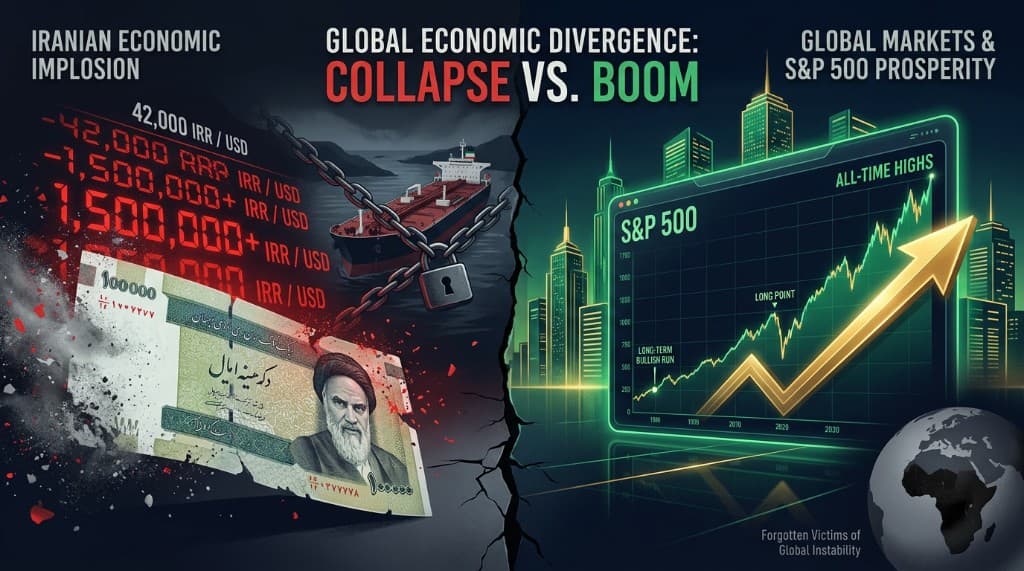
Iran Cannot Hold — Rial Approaching Zero, 50% Unemployment, 34 Days Without Pay. Markets at All-Time Highs.
From London, Cava dissects Iran's economic implosion with surgical precision. The numbers tell a story of a regime on the edge: 50% unemployment (12 million people), civil servants unpaid for 34 days, inflation at 70-100%, and the rial collapsing from 42,000 to 1.5 million per dollar. The Hormuz blockade drains $150M net per day. The war has shifted from military to economic — and Cava believes it's unwinnable for Iran. Meanwhile, markets don't care: SP500 and Nasdaq at all-time highs, Brent capped at 103.5, and the 10-year yield steady at 4.3%.

Cava Reveals His Speculation System — Why Risk Management Beats Fundamentals, and Why Buffett Is Wrong to Sit on $360B
Cava opens his playbook in a rare double feature. Part one: the foundations of his speculation system — why the investor who only wins 20% of the time but controls risk beats the fundamental analyst and the technical trader. He maps the SP500's intraday patterns hour by hour, revealing when 'dumb money' enters vs when institutional money closes the day. And he takes a direct shot at Buffett: sitting on $360B in cash during a bull market is a one-trick strategy. Part two: the US economy is stronger than headlines suggest (GDP ~2.6%, consumption resilient, earnings +15%), the historic 3-week rally was driven by $90B in short covering and CTA buying, and credit market stress is fading. The system is still bullish — but the mechanical buying is nearly exhausted.

Iran's Oil Fields Won't Die — The Real Damage Is Financial. Plus: Why Are Portugal and Slovenia Borrowing in Chinese Yuan?
Cava dismantles three common narratives. First: the Hormuz blockade won't cause irreparable damage to Iran's oil fields — the real threat is financial, not physical. Iran's largest field (Khuzestan) survives even at zero production, and Iran is already circumventing the blockade via trucks, railways, and coastal ships. Second: Slovenia and Portugal are issuing sovereign debt in Chinese renminbi — cheaper than euros, but it signals China's expanding economic influence in Europe through lobbying and strategic investment. Third: taxes represent 48% of gasoline prices in OECD countries — nearly double the actual cost of crude oil.

Institutions Are Buying Everything — UAE Exits OPEC — and China Is Hoarding Oil for a Reason Nobody Wants to Talk About
Cava reveals three converging forces reshaping markets. First: institutional investors are pouring record-breaking amounts into global equities — especially tech and AI — betting on massive liquidity injections and accelerated profit growth in 2026-2027. Second: the UAE has left OPEC, a geopolitical earthquake linked to Gulf tensions and Kuwait's expanded production capacity, which will likely flood the market with oil and push gold higher. Third: China is buying oil at record prices — not to profit, but to build strategic reserves for energy independence ahead of potential military action on Taiwan and to power its AI infrastructure. The world's biggest players are positioning for something massive.