Blog
Market analysis and congressional trading insights

Forever Values: The 5% That Keeps You Sane When AI Stocks Fall 30%
José Luis Cava introduces the concept of 'forever values' — assets held permanently to reduce drawdown in portfolios concentrated in high-volatility sectors like AI. Monster Beverage and Coca-Cola meet the criteria: predictable revenue, positive free cash flow, buyback programs, and competitive dividend yields. The allocation rule is strict: maximum 5% of portfolio, with entry discipline tied to algorithmic sweep patterns and specific support zones.
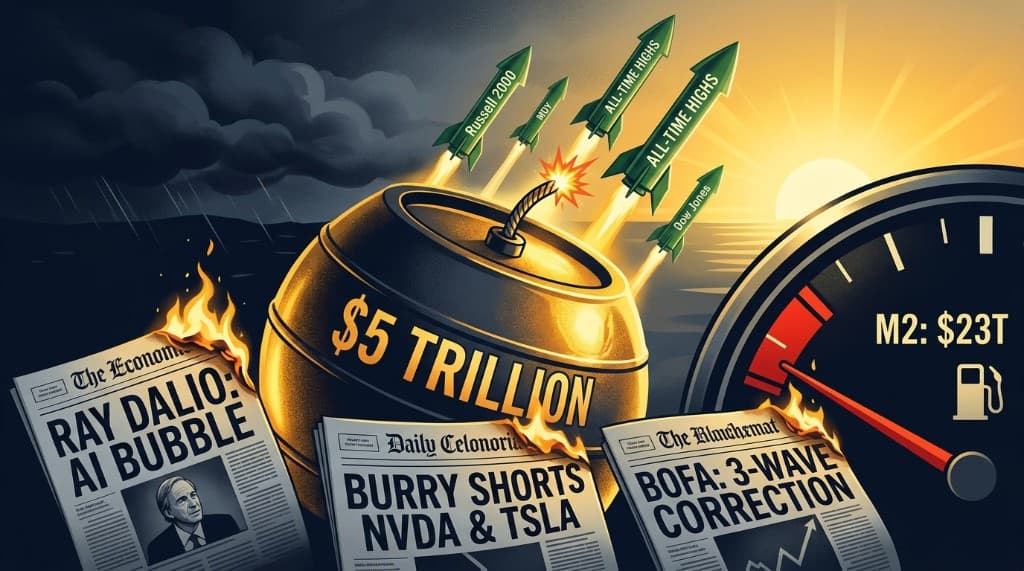
When Dalio and Burry Are Both Bearish: The $5 Trillion Fuel Nobody Is Talking About
Ray Dalio calls AI a bubble. Michael Burry opens shorts on NVIDIA and Tesla. Professional fund managers reduce US equity exposure at the fastest pace in history. Bank of America forecasts a three-wave correction. José Luis Cava's response: this is the most compelling contrarian setup of 2026. US M2 has grown from $15 trillion in 2020 to $23 trillion today, with May posting the largest single-month increase in history. Households are sitting on $5 trillion in money market funds. The Russell 2000 and mid-cap 400 are at all-time highs. The breadth is broad. The fuel is loaded.
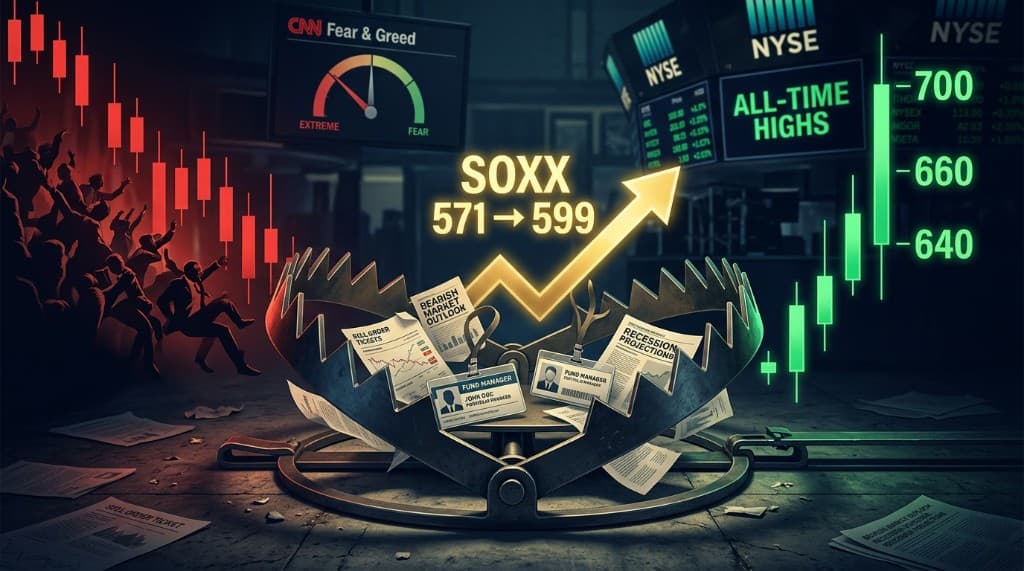
The Trap Is Sprung: How Algos Fooled Professional Managers — and Why July Looks Bullish
José Luis Cava documents one of the clearest algorithmic traps of 2026: professional fund managers sold US tech at the highest volume in a decade for eight consecutive days, only to be swept out at the exact bottom on June 29 as SOXX broke to 571 — then immediately bounced to 599. With extreme fear in retail sentiment, the NYSE and Dow at all-time highs, the S&P 500 advance/decline line at new peaks, and the 10-year yield turning down toward 4.31%, the setup for July is distinctly bullish.
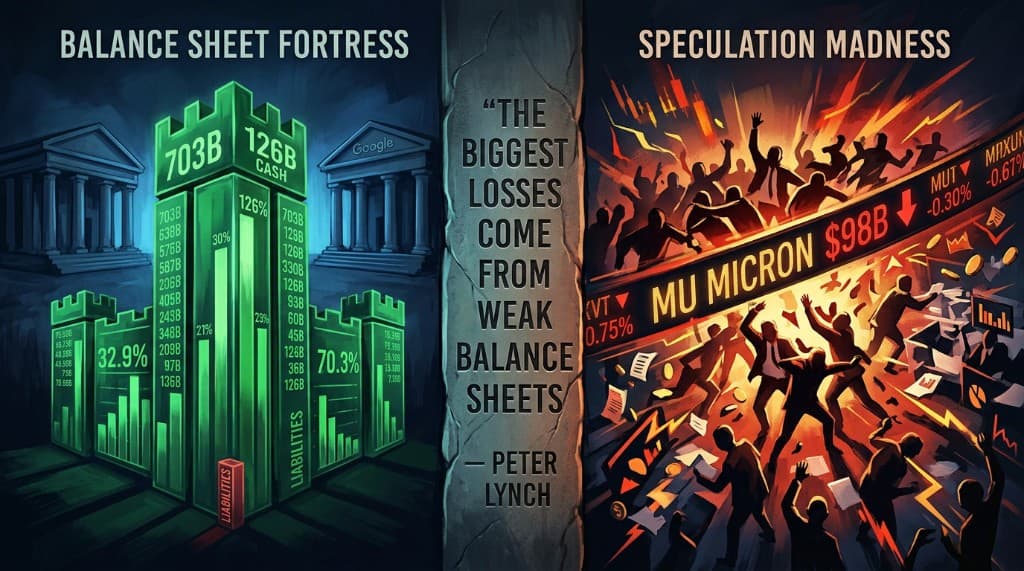
Peter Lynch Was Right: How to Read a Balance Sheet — and Why Alphabet's Is Exceptional
Fernando Sánchez uses Alphabet's real Q1 2026 balance sheet to teach Peter Lynch's core principle: the biggest losses in the stock market come from companies with weak balance sheets. Alphabet's numbers — $49B net cash, zero short-term debt, 1.92x current ratio — tell a very different story. Meanwhile, Micron's $98B single-day trading volume signals speculative frenzy in exactly the wrong sector.
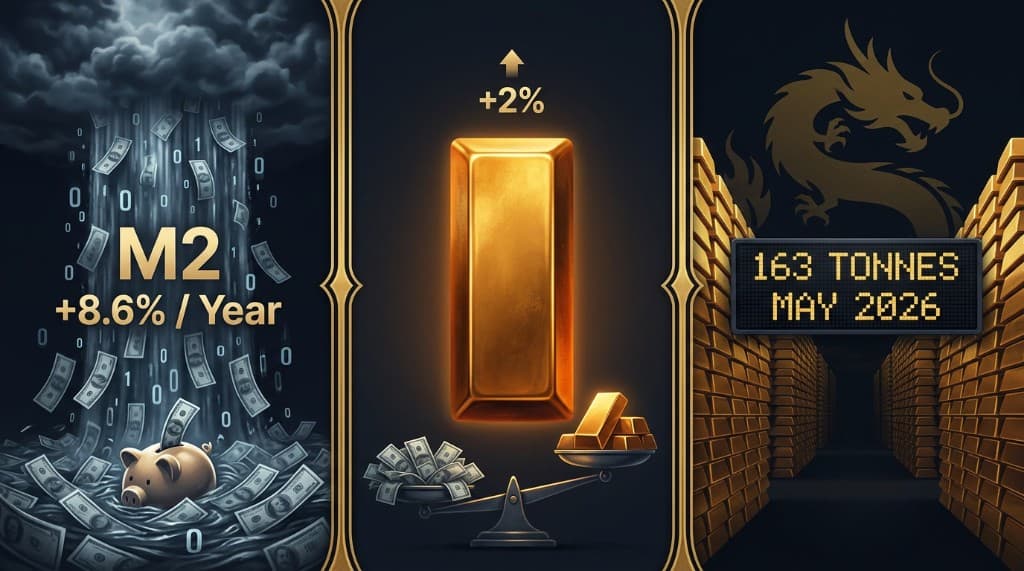
The 5% Annual Tax You Never Voted For: M2, China's Gold Rush, and Why Cash Is the Riskiest Asset
José Luis Cava breaks down the mathematics of monetary degradation: when central banks expand the money supply at 5-9% annually while gold production grows only 2%, holding cash guarantees a real loss. China is already acting on this — importing 163 tonnes of gold in May alone, equivalent to the Fed's entire monthly liquidity injection. The most dangerous investment of our era is the one everybody thinks is safe.

Russia's Oil Trap: Urals at $50, Refineries Burning, and Why the Resolution Could Be Gold's Biggest Catalyst
José Luis Cava connects three threads: the algorithmic cleanup of the KOSPI still targeting 7,040, Russia's fiscal collapse with Urals crude at $50 and 20% of its refining capacity destroyed, and the scenario where a Ukraine or Hormuz resolution triggers a massive surge in gold and Bitcoin.
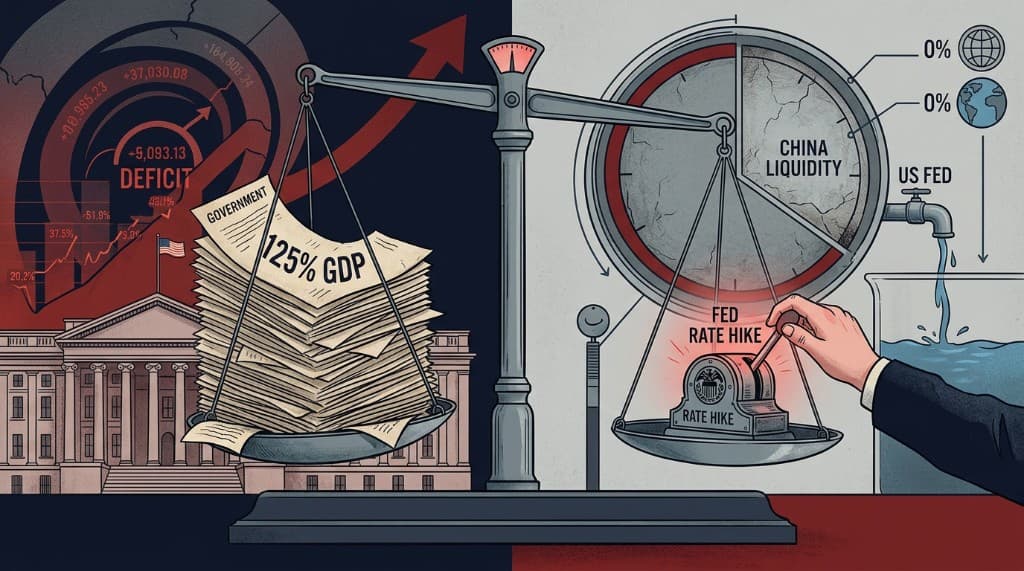
Warsh's Impossible Math: Why Debt at 125% GDP Makes Rate Hikes Fiscal Suicide
Cava explains the structural constraint that will define Warsh's tenure: US debt at 125% of GDP means rate hikes would collapse the fiscal system. Meanwhile, SpaceX and OpenAI megaplacements are draining liquidity from markets, China is paradoxically contracting despite a weak economy, and gold and Bitcoin are signaling the absence of Chinese liquidity.

Why Cava Is Bullish on US Banks: Yield Curve, AI Fee Revenue, and the Stablecoin Windfall
In his 'Why Am I Bullish?' series, José Luis Cava makes the case for US large-cap banks. The thesis combines a positive yield curve, solid balance sheets, three AI-driven revenue channels, and a technical setup with a clear entry zone. European investors can access the same exposure through BNKS or IUS2, UCITS-compliant accumulation ETFs.

The New Wealth Extraction Playbook: Unrealized Gains Taxes, the Digital Euro, and Why the Middle Class Must Own Hard Assets Now
José Luis Cava connects the dots between Korea's KOSPI crash, the Netherlands' unrealized gains tax, the EU's digital euro project, and the predictable roadmap for US debt management. The conclusion is uncomfortable but consistent: governments facing insolvency will change the rules. Hard assets owned before the rule change are the only protection.
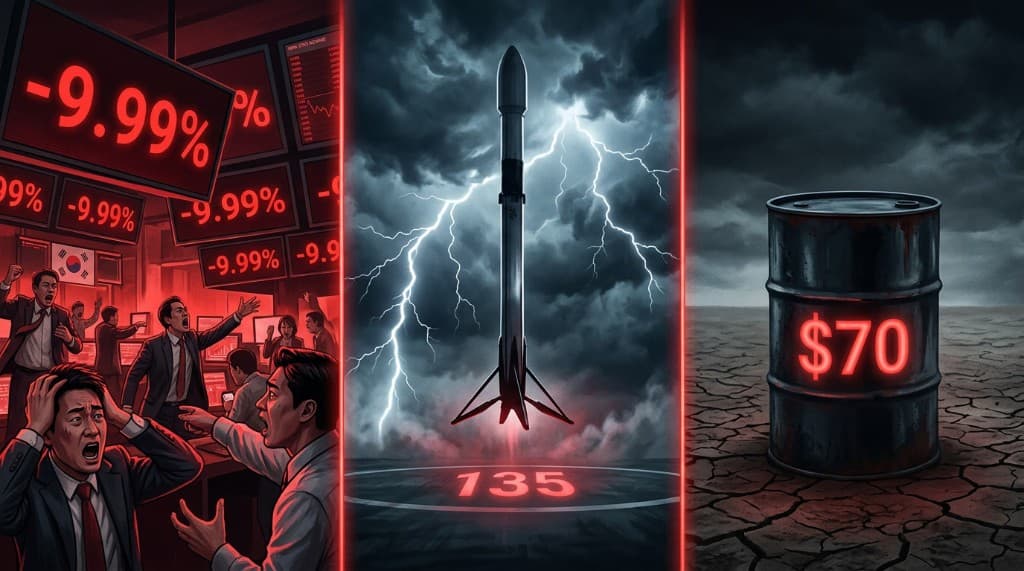
Black Tuesday in Seoul: The Algo Trap Behind KOSPI's -10%, SpaceX's Path to $135, and Why $70/Barrel Is Putin's Nightmare
José Luis Cava dissects today's KOSPI -10% collapse: not an AI bubble burst, but a textbook algo-driven liquidity sweep. He also explains why SpaceX must reach $135 before forming a bottom, and why $70/barrel Brent could be the event that finally destabilizes Putin's regime.

When Fear Peaks: The Psychology of Crashes, the Hyperscaler Oligopoly, and the Momentum-Quality Gap That History Always Closes
Fernando Sánchez's live analysis of the tech crash goes deeper than price levels. He explains the neuroscience behind panic selling, why hyperscalers are exactly as cheap as they look, and why the gap between semiconductor momentum and hyperscaler quality is historically unsustainable.

The End of Bretton Woods 2.0: How Sanctions Failures Are Building a New Monetary Order — and Why Gold Wins
José Luis Cava offers a sweeping analysis of the structural transformation underway in the global monetary system. US sanctions against Iran, Russia, and North Korea have not failed — they achieved realistic partial objectives. But they have accelerated a process that may prove more consequential than any of those targets: the construction of alternative financial architectures that reduce dependence on the dollar. China is the principal architect and beneficiary. And gold — which China has been buying for 19 consecutive months — is the asset that benefits most from this structural shift.
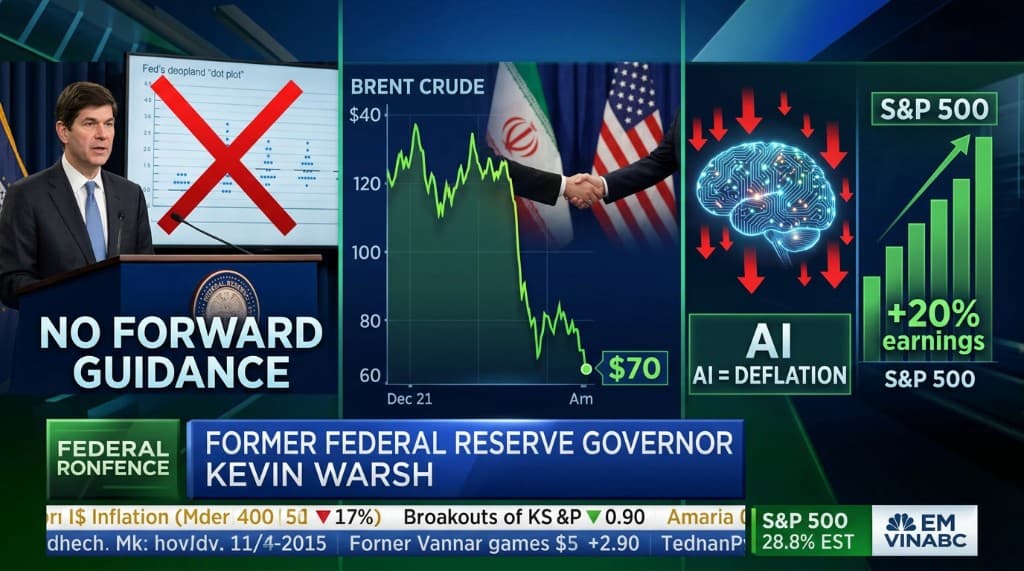
The Warsh Era Begins: Less Communication, Oil at $70, and AI as the Fed's Deflationary Ally
Kevin Warsh has taken over the Federal Reserve and the first meeting delivered no surprises on rates — but a radical shift in communication philosophy. Forward guidance is effectively dead; the dot plot may follow. The market sold off on day one, as it has done in six of the last nine Fed leadership transitions. Fernando Sánchez argues this is the wrong reaction: with Brent crude collapsing to $70 following the US-Iran preaccord, the inflationary pressure that justified hawkish fears has diminished sharply. Add Warsh's own thesis that AI will be structurally deflationary, and the medium-term case for equities — built on 20%+ S&P earnings growth and 2.1% GDP — remains intact.
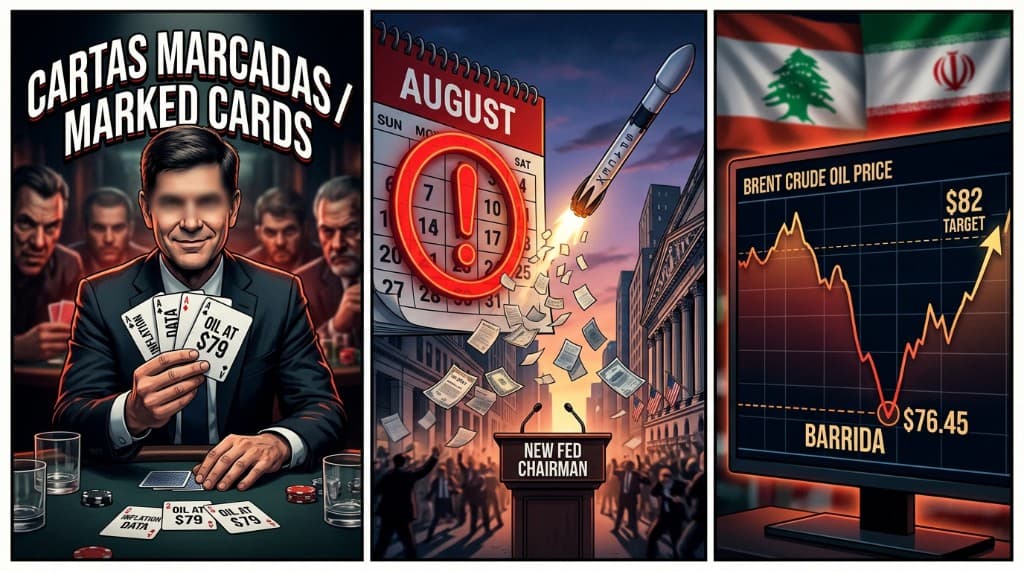
Warsh Is Playing With Marked Cards — And August Is When the Market Finds Out
José Luis Cava argues that Kevin Warsh has a structural advantage in his opening months as Fed chair: inflation at 4% will fall naturally to 3-3.5% by year-end as energy prices normalize, letting Warsh claim success without decisive action. The five working groups he announced are, in Cava's reading, a mechanism to buy approximately two months of time. That window closes in August — when SpaceX begins releasing paper into the market, the statistical probability of a new-Fed-chair correction peaks, and the oil recovery toward $82 adds inflationary noise. The near-term is constructive. August is where discipline pays.
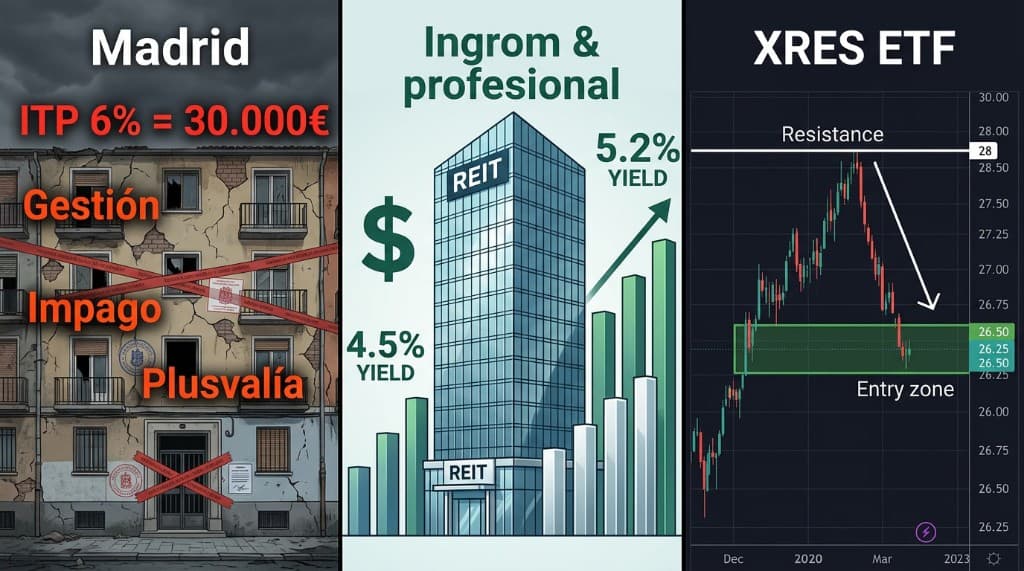
Why REITs Beat Physical Property: Cava's Framework for Selecting Real Estate Investment Trusts
In the latest installment of his bullish series, José Luis Cava makes the case for REITs (Real Estate Investment Trusts) over direct property ownership — and provides a precise selection framework for identifying which ones to buy and when. The criteria combine a minimum dividend yield threshold (10-year Treasury rate plus BBB corporate spread), technical trend analysis, and valuation discipline. For European investors, the XRES accumulation ETF offers tax-efficient exposure to the US REIT market, with an ideal entry zone at 26.25-26.50 after the current resistance at 28 resolves.